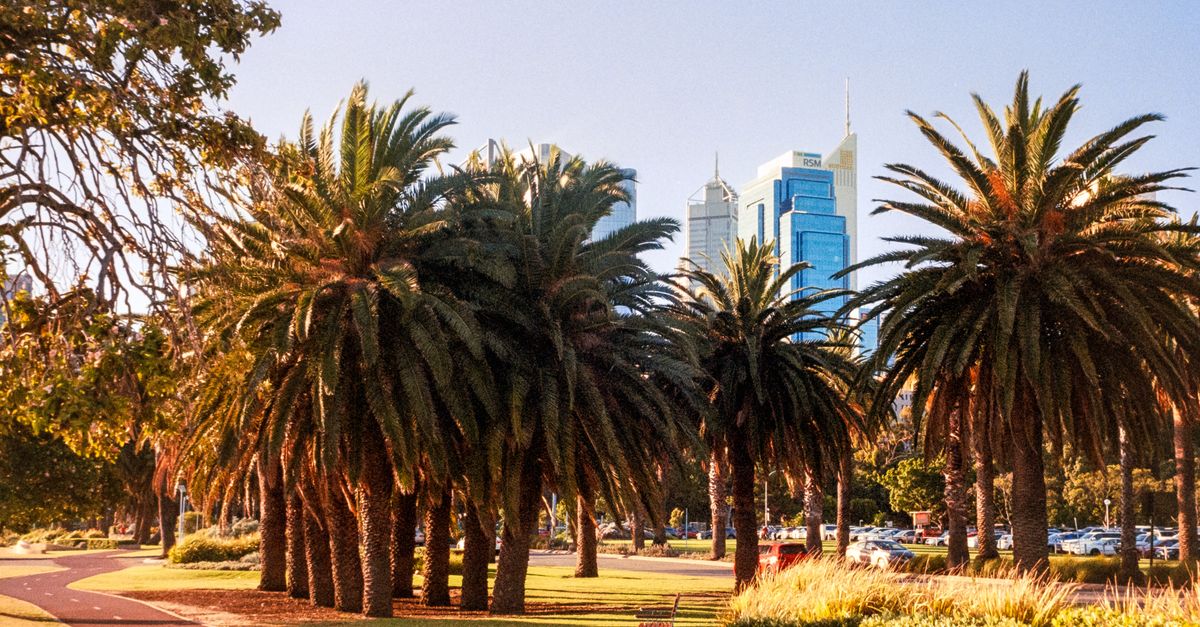
If you’ve ever typed “why is it hard to make friends in Perth” into a search bar, here is the strange thing: you did it in the fastest-growing capital city in the country. Perth added people at a faster rate than Sydney, Melbourne or Brisbane last financial year. More neighbours, more cars on the Mitchell, more names on the café docket rail. And somehow, for a lot of us, no easier to find someone to actually have a coffee with.
That’s not a contradiction. It’s a pattern, and the data explains it better than the usual theories about Perth being cliquey or quiet. This is a story about geometry, time and churn.
The boom, in numbers
Start with the headline figures. The Australian Bureau of Statistics’ Regional Population release for 2024–25 puts Perth’s growth at 2.4 per cent for the year, the fastest of any capital (ahead of Brisbane on 2.1 and Melbourne on 2.0), adding 58,100 new residents and taking Greater Perth past 2.45 million people. Western Australia was the fastest-growing state overall, at 2.2 per cent, and six of the ten fastest-growing local government areas in the country were in WA, led by Kwinana and Serpentine–Jarrahdale on Perth’s southern fringe.
Notice where the growth is landing. Not in the middle. The same ABS release shows Brabham–Henley Brook, out past Whiteman Park, grew 12 per cent in a single year, while Alkimos–Eglinton, 40-odd kilometres up the northern coast, grew 13 per cent and recorded the largest net internal-migration gain in the state: people moving there from elsewhere in Perth and Australia. Of Perth’s overall increase, net overseas migration contributed the biggest share at 37,300 people, ahead of natural increase on 12,600 and internal migration on 8,200. Perth is booming, and it is booming at its edges.
More people is not more connection
Here is the first uncomfortable truth: population growth and social connection are different quantities, and one does not buy the other.
Think about who those 58,100 new Perth residents are. Most arrived from overseas, and a steady stream came from interstate. KPMG’s April 2026 analysis of the same figures found thousands of people leaving Sydney and Melbourne, with urban economist Terry Rawnsley putting it down to affordable housing steering internal migration, and Brisbane and Perth attracting workers with their economic activity and lifestyle. Almost by definition, these are people who arrive knowing nobody, or close to it.
Friendship, meanwhile, runs on a slower clock. Research by Jeffrey Hall at the University of Kansas put rough numbers on it: around 50 hours of shared time to move someone from acquaintance to casual friend, about 90 hours to a real friend, and more than 200 for a close one. Hours, not encounters. A city can add 58,100 residents in a year. It cannot add 58,100 people’s worth of 90-hour friendships in a year. The maths doesn’t allow it. So a fast-growing city is, at any given moment, carrying an unusually large stock of people whose friendships haven’t formed yet. That’s not a character flaw in the city. It’s an arithmetic consequence of the boom.
The world’s longest city
Then there’s the geometry. Perth is regularly described as the longest city in the world, and it isn’t much of an exaggeration: the built-up strip now runs roughly 150 kilometres along the coast, from Two Rocks in the north to the far side of Mandurah in the south. Photographer and filmmaker Harry Cunningham spent months documenting that corridor for The World’s Longest City, an exhibition and documentary shown at Perth Design Week: street after street of brand-new homes at the very edge of a very stretched city.
Length matters for friendship because friendship is, stubbornly, a proximity business. Decades of research, back to Leon Festinger’s famous 1950 student-housing study, keeps finding the same thing: we become friends with the people we can reach easily and see often. In a long, thin, low-density city, the person you clicked with at work or at the gym has decent odds of living 45 minutes away by car. Neither of you is imagining the friction. It is real, it is measured in kilometres, and it quietly taxes every catch-up you try to schedule. A friendship that needs 90 hours to form has to fight the Kwinana Freeway for every one of them.
To be fair to the suburbs: the evidence that sprawl by itself erodes community is genuinely mixed, and plenty of outer-suburban streets are friendlier than inner-city apartment corridors. There is also encouraging Australian research pointing the other way: a 2022 study by Jack Lam and Siqin Wang in the Journal of Applied Gerontology, using geocoded HILDA data from South East Queensland, found that people in compact neighbourhoods with higher density and more accessible green space reported lower levels of loneliness, most likely because compact places generate more incidental contact. The problem isn’t that Alkimos lacks community spirit. It’s that distance raises the price of every friendship that doesn’t live on your street.
The commute is eating the catch-up
Distance also shows up in the diary. The HILDA survey, the long-running study that follows thousands of Australian households, found that the average worker’s commute grew from 3.7 hours a week in 2002 to 4.5 hours by 2017. Perth workers averaged 59 minutes a day, gentler than Sydney’s 71 but still an hour, and the freeways have not become emptier since. As growth keeps landing at the far ends of a 150-kilometre city, the travel budget keeps growing with it.
Why that matters socially was spelled out a generation ago. In Bowling Alone, the Harvard political scientist Robert Putnam worked through decades of American data and landed on a blunt rule of thumb: every additional ten minutes of daily commuting predicts roughly ten per cent less involvement in community life: fewer clubs, fewer gatherings, fewer of the ordinary appearances that connection is built from. Time spent on the freeway is drawn from the same account that pays for a Tuesday coffee. An hour a day, every working day, is a lot of withdrawals.
So it isn’t you
Put the three together: a big stock of newcomers whose friendships haven’t formed yet, a city shape that raises the cost of every meet, and a commute quietly eating the spare hour. Perth’s paradox stops being mysterious. Nationally, Ending Loneliness Together’s State of the Nation research found one in three Australian adults reporting loneliness. There’s no reason to think the country’s fastest-growing, longest capital is beating that average. If making friends here feels harder than it should, the data says the same thing a good mate would: it isn’t you.
It also points at the workaround. You can’t shorten the city, but you can shrink the problem to one person, one café, one hour. Pick somewhere in the middle; in a long city, meeting halfway is half the gesture. Deliberate beats accidental here, because the accidental collisions that build friendships in denser places (the shared footpaths, the repeated bumping-into) are exactly what 150 kilometres of coastline dilutes. And the newcomers are, if anything, the opportunity hiding in the statistics: tens of thousands of people arrived this year genuinely hoping to meet someone like you.
That’s the gap Flat White is built for, and it’s why Perth is the launch city. One person, one café, one hour, matched on purpose rather than left to the freeway’s mercy. In a city that grows at the edges, the fix is to meet in the middle.
Meet one person. Over coffee. On purpose.
Australia’s opening city-by-city, Perth first. Join the waitlist at joinflatwhite.com →